Discovering the Osa Anteater in Corcovado National Park
Discover the Northern Tamandua in Corcovado National Park, including its feeding habits, climbing adaptations, behavior, ecological role and

Practical planning advice on stations, access, trip length, wildlife expectations and what to know before visiting one of Costa Rica’s wildest protected areas.
By Allan Guevara
Certified Costa Rica Tour Guide · Guiding in the Osa Peninsula since 2009
Updated August 2026 · Long-form planning guide
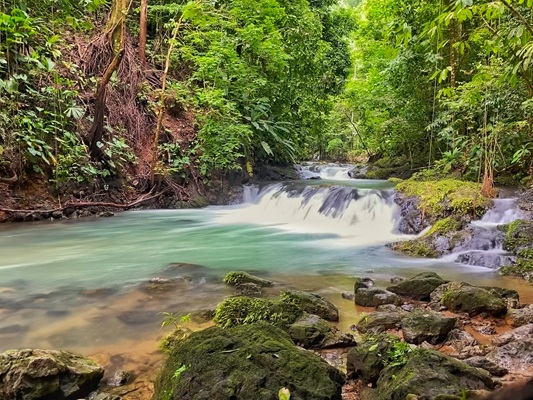
The key planning decisions before you choose a route or tour.
Corcovado is not a short wildlife loop where every visitor follows the same experience. The rainforest itself is the attraction: trails, coast, rivers, heat, humidity, sounds, tracks and wildlife all become part of the visit.
Wildlife is naturally one of the main reasons people come, but a responsible visit starts with the right expectation: specific animals are never guaranteed. Corcovado is a wild ecosystem, and that unpredictability is part of what makes it special.
One of the most common planning mistakes is asking which Corcovado station is “the best.” The better question is which station fits your time, interests, access point and physical expectations.
— Allan Guevara, Certified Costa Rica Tour Guide
There is no single trail system called “Corcovado.” Different sectors offer different access conditions, hiking styles and landscapes. For first-time visitors, understanding this is more useful than chasing a universal ranking.
The central sector associated with the classic Corcovado wildlife experience. A strong choice for visitors who want to spend more time inside the park and combine different trail environments.
A different rainforest and hiking experience, with its own trail network and character. It should be chosen for the experience it offers—not treated as a lesser version of Sirena.
An important land-access sector in the south. Hiking plays a much larger role in the experience, making it attractive to travelers who want the journey on foot to be part of the adventure.
There is no single correct duration. A one-day visit can be excellent, but if time and budget allow, two days and one night is the option I recommend most often because the experience feels less compressed and you spend more time inside the forest.
A practical introduction when your itinerary is tight. Transport, arrival and departure naturally occupy part of the day, so the experience is more concentrated.
For many travelers, this is the best balance. You experience different periods of the day and wake up surrounded by the rainforest instead of visiting for only a few hours.
Best for travelers who want Corcovado to be one of the central experiences of their Costa Rica trip, with more time for walking, observing and understanding the environment.
There is no single answer to “How do I get to Corcovado?” Your route depends on where you are staying, which sector you want to visit and how much time you have.
Drake Bay is one of the principal bases for marine access to Corcovado and is especially convenient for travelers already staying on the northwestern side of the Osa Peninsula.
Sierpe is an important mainland departure point for boat access and works well for travelers approaching from Costa Rica’s central and southern Pacific coast.
Travelers based around Uvita can visit Corcovado without necessarily relocating their entire itinerary to the Osa Peninsula.
Puerto Jiménez is the principal base on the eastern side of the Osa Peninsula and is especially relevant for Sirena and southern hiking routes.
Common mistake: choosing a departure point only because it looks closer on Google Maps. Roads, boats, trail access and local logistics matter more than straight-line distance.
Use your overnight base and preferred park sector to choose the most practical starting point.
Corcovado is a tropical rainforest, and conditions change throughout the year.
Rainfall, trail conditions, river levels, heat, humidity and marine conditions can all affect the experience. Rather than looking for one “perfect” month, it is more useful to understand what conditions are typical during the period when you plan to visit.
Some times of year may be drier, while others can bring more rain, muddier trails and changing river or ocean conditions. These differences do not automatically make one season good and another bad — they simply change how you should prepare.
Before your trip, check current park access, trail conditions and operational updates for your travel dates.
Corcovado protects habitat used by an exceptional variety of mammals, birds, reptiles, amphibians and insects. Wildlife is one of the park’s greatest attractions, but sightings are never guaranteed.
Animals move. Weather changes. Food availability changes. Two people can walk the same trail on different days and have very different experiences.
A professional guide can improve your ability to detect animals and understand tracks, sounds, movement and habitat clues—but nobody can responsibly promise that a particular wild animal will appear.
Corcovado is a national park, not a zoo.
Difficulty depends enormously on the route. A visitor taking a marine transfer followed by guided trails faces a very different challenge from someone using a long land-access route.
Tell your guide or tour operator honestly about physical limitations. The goal is to choose the right Corcovado experience, not prove something to the rainforest. The rainforest usually wins that argument anyway.
Your exact equipment depends on the route and current conditions, but practical tropical hiking gear matters more than fashionable outdoor gear.
Important: Always confirm current park rules before packing food, plastics or other controlled items.
Only then should you choose the tour.
Certified Costa Rican tour guide, guiding since 2009. Allan works primarily in Corcovado National Park, the Osa Peninsula and Costa Rica’s South Pacific, guiding in Spanish, English and German.
This guide combines official information with practical observations from years of working with travelers in the region.
For travelers interested in tropical rainforest, wildlife and nature, Corcovado can be one of the defining experiences of a Costa Rica trip. It does require more planning than many easily accessible attractions.
Not automatically. The better choice depends on the traveler, itinerary, access point, physical expectations and type of experience desired.
One day can provide a worthwhile introduction. If time and budget allow, Allan generally recommends two days and one night because the experience is less compressed.
No. Corcovado protects wild ecosystems and animals move naturally through them.
We do not reduce Corcovado to a simple good-season/bad-season rule. Conditions vary through the year, and the useful question is what to expect and how to prepare for your dates.
That depends on your itinerary and selected sector. Drake Bay, Sierpe, Uvita and Puerto Jiménez each support different access strategies.
Operational rules, access conditions and restrictions should be rechecked before each major update.
Continue planning your visit with more practical guides about Corcovado National Park and the Osa Peninsula.
Discover the Northern Tamandua in Corcovado National Park, including its feeding habits, climbing adaptations, behavior, ecological role and
Explore the natural history of Corcovado National Park and discover how rainforest, rivers, wetlands, coastline and wildlife interact
Tell us where you are staying, how many days you have and what kind of experience you want. We’ll help you narrow down the most practical route.